
How the Iran War Is Reshaping Dubai’s Real Estate Market
Dubai has always been the Middle East’s most resilient property market — and the Iran-Israel war is putting that resilience to its biggest test yet. With conflict reaching closer than ever before, the iran war impact on dubai real estate has become the defining question for global property investors in 2026.
Iranian drone debris struck near Dubai International Airport, the Burj Al Arab, and Palm Jumeirah in early March 2026. Markets reacted. Sentiment wobbled. But Dubai has been here before — and it has always come back stronger.
This analysis examines exactly how the UAE property market is responding right now — across residential demand, commercial real estate, property prices, and rental yields — and why many seasoned investors are still backing Dubai through the uncertainty.
Dubai survived the Arab Spring, the 2008 global crash, and the Russia-Ukraine war. Each crisis ultimately strengthened its safe-haven status. Here is what the current conflict means — and why the fundamentals still hold.
Iran-Israel War: Regional Context and What It Means for Dubai Property
The Iran-Israel war escalated dramatically in late February 2026. US and Israeli coordinated strikes killed Supreme Leader Ali Khamenei and dismantled key Iranian nuclear and military infrastructure. Iran retaliated swiftly — launching drone and missile attacks across the Gulf, striking Bahrain and the UAE directly.
Oil prices spiked 9–14% almost immediately on Strait of Hormuz disruption fears. Global equity markets sold off. Capital rotated into gold and the US dollar in a classic risk-off move.
For Dubai, this was no longer a distant conflict. Drone debris hit Dubai International Airport, the Burj Al Arab, and Palm Jumeirah. The Dubai Financial Market closed for two sessions — something almost unprecedented in the emirate’s history.
Yet the UAE’s response was measured and strategic. Abu Dhabi doubled down on diplomacy, urging de-escalation while quietly reinforcing air defenses. The government’s message to investors was clear: Dubai remains open, operational, and committed to stability.
This geopolitical backdrop is exactly why understanding the iran war impact on dubai real estate matters now more than ever — not to predict doom, but to separate short-term sentiment shock from long-term structural reality.
How Dubai’s Property Market Reacted to the Iran War
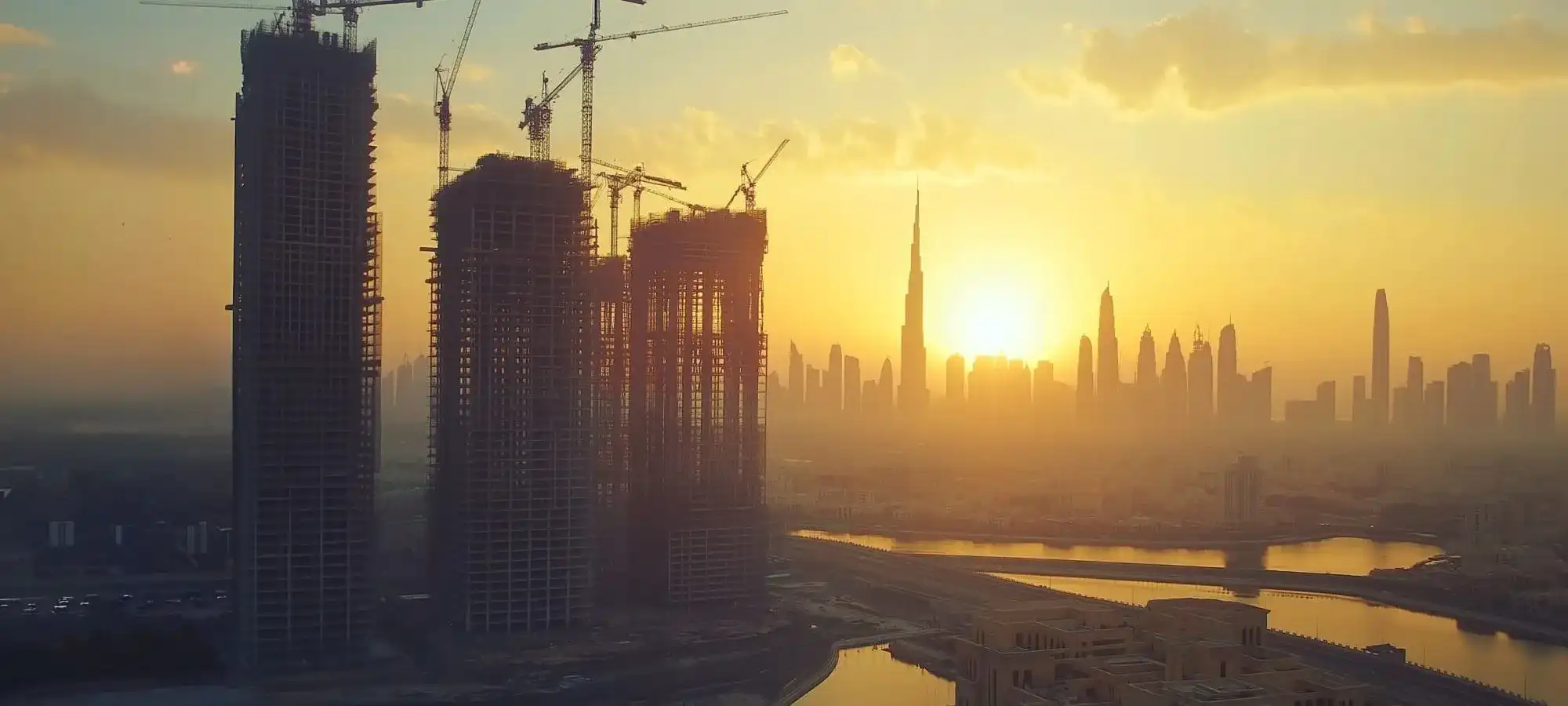
Markets reacted fast. The Dubai Financial Market benchmark dropped 4.65% at open on March 4, 2026, with Emaar and major developers leading the sell-off. The exchange shut for two consecutive sessions — a rare move that underlined the severity of the moment.
But here is what matters more: the rebound came just as quickly.
Within days, bargain hunters moved in. Cash-rich investors — many already positioned in Dubai property — began absorbing discounted equities. Analysts noted that the sell-off reflected sentiment shock, not structural damage to Dubai’s property fundamentals.
This pattern is consistent with how Dubai has historically responded to regional crises. A sharp, short correction followed by disciplined recovery. The iran war impact on dubai real estate has so far followed that same playbook.
Dubai entered this crisis from a position of extraordinary strength. January 2026 recorded AED 55.18 billion in residential transactions — a 43.9% year-on-year surge. Off-plan sales alone accounted for over 71% of activity. That momentum does not evaporate overnight.
The real test is not the initial reaction — it is what happens over the next 8–12 weeks as the geopolitical situation either stabilizes or escalates further.
Iran War Impact on Dubai Real Estate: Why It Remains a Regional Safe Haven
Every major Middle East crisis of the last 25 years has ultimately sent capital into Dubai. The Arab Spring in 2011 brought wealth from Egypt, Syria, and Libya. The Russia-Ukraine war in 2022 triggered a luxury property boom driven by wealthy Russians. Each time, Dubai absorbed displaced capital and emerged with stronger transaction volumes and higher valuations.
The iran war impact on dubai real estate is following a similar pattern — but with one crucial difference. This time, conflict touched Dubai directly. That makes the safe-haven thesis more important to examine, not less.
Why Dubai Still Holds Safe-Haven Status
Political neutrality. The UAE maintains working relationships with both Israel and Iran. This diplomatic balance is not accidental — it is a deliberate strategy to keep Dubai commercially accessible to every nationality and investor group regardless of which side of a conflict they sit on.
Currency stability. The UAE dirham’s peg to the US dollar eliminates currency risk entirely. There are no foreign exchange controls. Investors can move capital in and out freely — a rare advantage in an unstable region.
Zero income tax on rental earnings. Combined with gross rental yields of 6–9%, Dubai offers returns that no comparable global city can match. London yields 2.8%. Singapore 3.5%. Hong Kong 2.2%. The financial case for Dubai property remains intact.
Despite the March 2026 strikes, high-net-worth individuals from conflict-affected markets are still enquiring about Dubai property. Families are securing long-term rentals as contingency arrangements. Off-plan sales from regional buyers remained active through February 2026.
Owning Dubai real estate has always been a hedge against home-country instability. That proposition has not changed — it has simply been tested more seriously than ever before.
How the Iran War Is Affecting Residential Property Demand in Dubai
The iran war impact on dubai real estate is most visible in how buyer behaviour has shifted — not disappeared. Demand has not collapsed. It has reorganised.
Regional Buyers Are Moving In
High-net-worth individuals from conflict-adjacent countries are actively securing Dubai property as a contingency asset. Israeli investors, who entered the market following the 2020 Abraham Accords, remain present. Dubai properties are priced at roughly half of Tel Aviv equivalents while delivering superior yields — the value case is undeniable.
South Asian buyers — particularly from India and Pakistan — continue to drive significant inquiry volumes, largely unaffected by the conflict narrative.
GCC and Local Investors Are Holding Firm
UAE nationals and GCC investors are not panicking. If anything, market dips are being treated as entry opportunities. This domestic confidence is a critical stabilising force that outside observers frequently underestimate.
Western and Institutional Capital Is Pausing — Temporarily
Some European and institutional investors have hit the pause button. This is a sentiment-driven response, not a fundamental reassessment of Dubai’s property market. History shows this capital returns — often aggressively — once clarity emerges.
| Region | Buyer Inquiry Share | Trend |
|---|---|---|
| South Asia | 22% | Rising |
| Middle East (ex-GCC) | 35% | Rising |
| GCC Nationals | 18% | Stable |
| China & East Asia | 11% | Stable |
| Europe | 14% | Slight dip |
Source: Developer Inquiry Reports, Q1 2026
Off-plan villa sales in gated communities remain among the strongest-performing segments — a clear signal that buyers are prioritising security and long-term value over short-term speculation.
Iran War Impact on Dubai’s Commercial Real Estate Sector
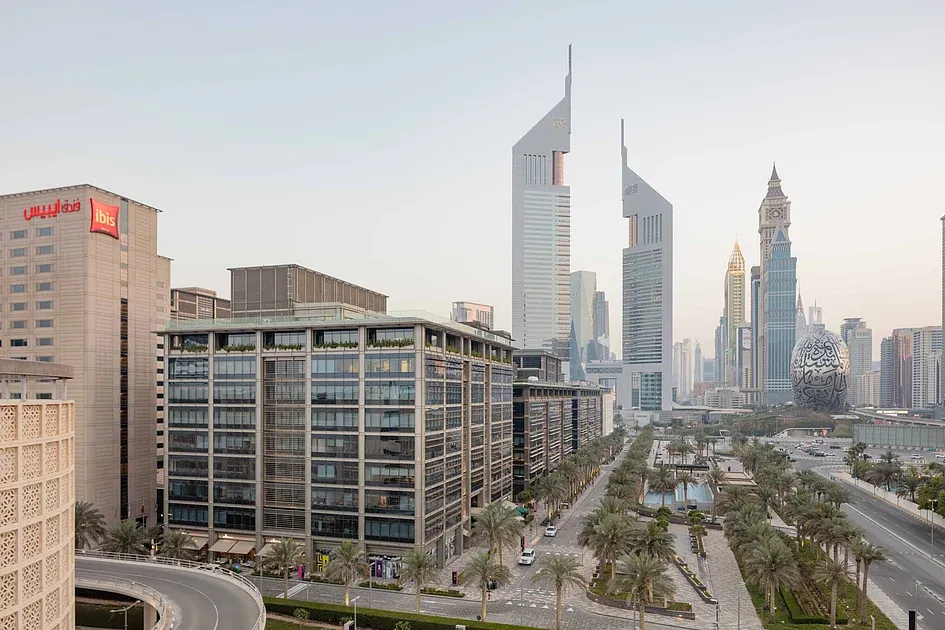
Commercial property in Dubai is not just holding — certain segments are actively benefiting from the conflict. The iran war impact on dubai real estate is creating a bifurcated commercial market: some sectors are accelerating, others are cautiously watching.
Office Space — Quietly Booming
Regional firms and multinational HQs are relocating contingency operations to Dubai’s free zones. Israeli companies, Gulf-based businesses, and international firms seeking a stable regional base are driving short-term lease demand. Prime business districts including DIFC and Business Bay are approaching full occupancy. If the conflict prolongs, this relocation trend will only strengthen.
Retail and Hospitality — Resilient but Watchful
Western tourist numbers have dipped slightly. But affluent Gulf families, South Asian visitors, and long-stay regional residents are filling that gap. Luxury retail, branded hotel apartments, and high-end malls continue to perform strongly. Domestic consumption in Dubai remains robust — a buffer that pure tourism markets simply do not have.
Industrial and Logistics — The Quiet Winner
This is the segment most investors are overlooking. Jebel Ali Port and KIZAD are reporting spikes in warehousing demand as regional firms hedge against supply chain disruptions. If Strait of Hormuz risks persist, Dubai’s logistics infrastructure becomes even more strategically valuable — and so does industrial real estate.
| Sector | Current Status | Outlook |
|---|---|---|
| Office Space | Near full occupancy in prime zones | Strong — relocation demand rising |
| Retail & Hospitality | Resilient, slight Western dip | Stable — domestic demand cushions |
| Industrial & Logistics | Demand spiking | Positive — supply chain hedging continues |
The commercial real estate picture reinforces a broader truth: Dubai does not just survive geopolitical crises — it frequently capitalises on them.
Iran War Impact on Dubai Property Prices and Asset Values in 2026
Dubai property prices rose 60% between 2022 and Q1 2025 — one of the strongest real estate runs of any global city. January 2026 alone recorded AED 55.18 billion in residential transactions, up 43.9% year-on-year. The market entered this crisis from a position of exceptional strength.
That context matters when assessing the iran war impact on dubai real estate on pricing.
Two Forces Are Now Competing
On one side, safe-haven demand is supporting prices. High-net-worth buyers from conflict-affected markets are channelling capital into prime Dubai assets — particularly Palm Jumeirah, Downtown Dubai, and Dubai Marina. Cash buyers, who accounted for nearly 60% of January 2026 transaction value, are not dependent on financing conditions and are unlikely to exit quietly.
On the other side, oversupply risk was already present before the conflict. Fitch had forecast a potential 10–15% correction in 2025–2026, driven by 210,000 new units entering the market — double the supply of the previous three years.
Where Prices Are Headed
Prime and waterfront assets are likely to hold value. Cash-rich buyers with substantial equity positions have little incentive to sell at distressed prices. Minor dips of 1–2% are possible in the short term as anxious sellers exit, but strong demand will absorb that supply quickly.
Mid-market and fringe segments carry more risk. If the conflict persists beyond 8–12 weeks, some price softening in oversupplied areas is plausible.
| Metric | Figure | Period |
|---|---|---|
| Residential Price Growth | +60% | 2022–Q1 2025 |
| January 2026 Transactions | AED 55.18B | Jan 2026 |
| YoY Transaction Growth | +43.9% | Jan 2026 |
| Fitch Forecast Correction | 10–15% (potential) | 2025–2026 |
| New Supply Pipeline | 210,000 units | 2025–2026 |
Sources: Dubai Land Department, Fitch Ratings, 2026
The bottom line: prime Dubai real estate is built to absorb shocks. Investors holding quality assets in established communities have little reason for alarm — and those sitting on the sidelines may find this the most compelling entry window in two years.
How the Iran War Is Affecting Dubai Rental Yields and the Rental Market
Dubai’s rental market was already running hot before the conflict. Double-digit rent increases through 2025 pushed gross yields into the 6–9% range — figures that no comparable global city comes close to matching.
The Iran war impact on Dubai real estate has, counterintuitively, added further fuel to rental demand.
Tenant Demand Is Rising
Regional professionals, displaced families, and corporate relocations are driving long-term lease demand across Dubai. Gated villa communities and branded residential towers are seeing the strongest absorption. Landlords in well-located assets are in a strong negotiating position.
Short-term rentals may soften slightly if Western tourism dips. But long-term leasing demand — from regional migrants, NGOs, and corporates — is more than compensating.
Where Yields Are Strongest
| Community | Rental Growth | Demand Driver |
|---|---|---|
| Dubai Hills Estate | +12.5% | Family gated villas, safe-haven relocations |
| Jumeirah Village Circle | +10.2% | Affordable apartments, young professionals |
| Downtown Dubai | +8.1% | HNWI relocations, branded towers |
Source: Property Monitor, Q1 2026
Dubai vs The World
| City | Avg. Gross Yield |
|---|---|
| Dubai | 6–9% |
| Singapore | 3.5% |
| London | 2.8% |
| Hong Kong | 2.2% |
Source: Global Property Guide, 2026
Even if property values soften marginally, rental yields will likely improve — since rents are holding firm while some asset prices dip. That is precisely the dynamic that makes Dubai property attractive as an income-generating investment during periods of uncertainty.
For landlords and yield-focused investors, this market rewards those who stay the course.
Iran War Impact on Dubai’s Property Development and Construction Activity
Dubai’s construction sector entered 2026 at full throttle. Record off-plan sales, ambitious developer pipelines, and a skyline full of cranes told a story of unstoppable momentum. The Iran war impact on Dubai real estate has introduced caution — but not paralysis.
Major Developers Are Staying the Course
Emaar, Nakheel, and other state-backed developers are continuing flagship projects. These are long-term infrastructure plays tied to Dubai’s 2033 vision — they do not pause for short-term geopolitical noise. Smaller private developers are being more selective, with some delaying non-essential launches until sentiment stabilises.
This discipline is actually healthy. A more measured launch pipeline reduces oversupply risk — one of the market’s biggest pre-existing vulnerabilities.
Construction Costs Are Ticking Up
Oil above $80 is pushing up transportation, steel, and concrete costs. Some smaller contractors face margin pressure. Project timelines may slip slightly — but crucially, this supply delay could absorb some of the 210,000-unit pipeline pressure that was already concerning analysts before the conflict began.
Off-Plan Demand Remains Solid
Off-plan sales rose 12% in early 2026 as investors accelerated purchases ahead of further uncertainty. Developers are responding with longer post-handover payment plans and yield guarantees to maintain sales velocity — terms that favour buyers significantly.
| Category | Status | Remarks |
|---|---|---|
| Major Developers (Emaar, Nakheel) | Continuing | Flagship projects prioritised |
| Mid-tier Private Developers | Mixed | Selective launches, some delays |
| Construction Input Costs | Rising | Oil-driven, manageable so far |
| Off-Plan Sales | +12% | Safe-haven buying accelerating |
Source: DLD Off-Plan Data, Developer Briefings, Q1 2026
For investors, a disciplined development cycle is better news than it sounds. Fewer speculative launches mean less downward price pressure. Quality projects by well-funded developers will continue delivering — and those are exactly the assets worth holding.
Risks and Challenges Ahead
A pro-Dubai outlook demands honest risk assessment. Understanding the Iran war impact on Dubai real estate means acknowledging what could go wrong — so investors can position intelligently rather than react emotionally.
Further Regional Escalation
This is the tail risk that matters most. If the conflict draws in additional actors or Iran escalates strikes on Gulf infrastructure, Dubai’s safe-haven status faces a genuine test. A Strait of Hormuz closure — even a temporary one — would send shockwaves through the UAE economy, property market included. This is not the base case, but it cannot be dismissed.
Global Liquidity Tightening
Oil above $100 would stoke global inflation and push interest rates higher. That shrinks the pool of international buyers who can afford Dubai property. Macro-financial contagion is a real risk — tighter global liquidity could suppress demand precisely when new supply is peaking.
Sentiment Overreaction
Foreign capital thrives on certainty. Negative headlines alone can cause institutional investors — European pension funds, global family offices — to pause allocations, even when Dubai’s fundamentals remain intact. This perception risk is self-correcting over time, but painful in the short term.
Oversupply Pressure
This risk existed before the conflict. With 210,000 units entering the market in 2025–2026, any demand softening amplifies the supply glut. Investors who bought at 2023–2024 peak prices in fringe locations carry the most exposure here.
| Risk Factor | Likelihood | Severity | Investor Impact |
|---|---|---|---|
| Wider Regional Escalation | Low–Medium | Very High | Capital flight, transaction freeze |
| Global Liquidity Crunch | Medium | High | Fewer buyers, higher financing costs |
| Sentiment Overreaction | Medium | Moderate | Temporary slowdown in foreign inflows |
| Oversupply Correction | Medium–High | Medium | Price stagnation in fringe segments |
Source: Analyst forecasts, historical conflict data, March 2026
None of these risks are reasons to exit Dubai property. They are reasons to be selective — prioritising prime locations, tier-one developers, and assets with strong rental income that can weather short-term volatility.
Iran War Impact on Dubai Real Estate: Opportunities Investors Shouldn’t Miss
Every major crisis in Dubai’s history has created its best buying windows. The Iran war impact on Dubai real estate is no different — for investors with conviction and a long-term horizon, the current environment is generating real opportunity.
Capital Is Looking for a Home
Gulf sovereign wealth funds and regional family offices are actively repatriating capital into trusted local markets. Dubai is the natural destination. Investor demographics are also broadening — buyers from Egypt, Turkey, Africa, and South Asia are entering the market in growing numbers, deepening the demand pool beyond traditional Western and Russian buyers.
Distressed Entry Points
Smaller developers facing cash flow pressure may offer off-plan units at discounted prices or with aggressive post-handover payment plans. Well-capitalised investors who move during this window — as they did during the 2020 pandemic and the 2014 oil crash — have historically generated the strongest returns in Dubai’s subsequent recovery cycles.
Rental Yield Arbitrage
Long-stay tenants, corporate relocations, and displaced regional families are driving occupancy in villa communities and branded residences. Investors holding quality rental assets are seeing yields firm up — and in some segments, improve — as tenant demand outpaces available supply in prime locations.
Government Policy as a Tailwind
The UAE government has a proven playbook for stimulating real estate during downturns: Golden Visa expansions, transfer fee reductions, developer incentives. Watch for policy announcements in Q2 2026 — timing an entry around these windows has historically delivered outsized returns.
| Opportunity | What to Watch | Investor Action |
|---|---|---|
| Off-plan with incentives | Post-handover plans, yield guarantees | Secure units from tier-one developers |
| Distressed asset pickup | Small developers under pressure | Acquire at discount with strong fundamentals |
| Rental yield arbitrage | Long-stay and corporate lease demand | Focus on villa communities and branded towers |
| Government incentives | Golden Visa, fee waivers, stimulus | Time entry around policy announcement windows |
Source: Market briefings, DLD, UAE Government, Q1 2026
Investors who looked past the fear in 2020 made fortunes by 2023. The same opportunity is taking shape again — for those who focus on fundamentals rather than headlines.
How the UAE Government Is Protecting Dubai Real Estate Against the Iran War
The UAE government’s response to the iran war impact on dubai real estate has been swift, strategic, and investor-focused. This is not a government that panics — it is one that has a proven playbook for protecting economic stability during regional crises.
Diplomacy as an Economic Shield
The UAE maintains active dialogue with both Israel and Iran — a diplomatic position that no other regional country can claim. This neutrality is not passive. It is a deliberate economic strategy that keeps Dubai accessible to every investor nationality regardless of geopolitical allegiance. Air defenses have been quietly reinforced. Institutional reassurances have been issued. The message to global capital is clear: Dubai remains open and secure.
Fiscal Firepower Is Ready
The UAE has deployed fiscal stimulus during every major crisis since 2008. Infrastructure spending, tourism incentives, airline support, and real estate fee waivers are all tools the government has used before and will use again if needed. Saudi-UAE oil output coordination is already working to prevent the kind of oil price spike that could destabilise global markets and reduce international buyer demand.
Investor-Friendly Reforms Will Continue
Golden Visas, 100% foreign business ownership, and remote work visas transformed Dubai’s real estate demand profile after 2020. Expect the government to expand these programmes further if foreign investor sentiment softens. A reduction in property transfer fees or lowered Golden Visa property thresholds would trigger an immediate demand response — as history has shown.
The Financial System Is Structurally Sound
Bank exposure to real estate has fallen from 20% to approximately 14% of total loans since 2009. Major developers carry government backing. Abu Dhabi’s sovereign wealth provides an ultimate financial backstop. A systemic property market crash is not a credible scenario under current conditions.
| Policy Lever | Purpose | Likely Actions |
|---|---|---|
| Diplomatic Neutrality | Preserve safe-haven status | Continued Iran-Israel engagement |
| Fiscal Stimulus | Stabilise key sectors | Infrastructure spend, tourism boosts |
| Real Estate Incentives | Retain and attract investors | Golden Visa expansion, fee reductions |
| Banking Backstops | Prevent financial contagion | Flexible lending, developer oversight |
Source: UAE Government, Central Bank, DLD, March 2026
The government’s alignment with investor interests is one of Dubai’s most underrated competitive advantages. Policy announcements in the coming weeks will create entry opportunities — investors who move quickly when incentives are announced have consistently outperformed those who waited for certainty.
Iran War and Dubai Property: Historical Parallels Every Investor Should Know
The iran war impact on dubai real estate is serious. But it needs to be assessed against Dubai’s track record — because that track record is extraordinary.
1990–91 Gulf War Iraq’s invasion of Kuwait sent shockwaves across the Gulf. Expats fled. Oil spiked. Yet Dubai stayed neutral, secure, and open. Relocated companies and professionals drove rental and commercial demand — Dubai’s first real taste of safe-haven capital inflows.
2008–09 Global Financial Crisis Dubai’s property bubble burst. Prices fell 40–50% in 18 months. Construction halted. It was painful — but the government restructured debt, merged developers, introduced escrow protections, and launched RERA reforms. That reset built the regulatory foundation for everything that followed.
2011 Arab Spring Uprisings across Egypt, Libya, Syria, and Yemen triggered the region’s largest capital flight in decades. Where did that money go? Dubai. High-net-worth buyers from North Africa and the Levant poured into luxury communities. Prices and rents rose. Dubai emerged more globally connected than before.
2022 Russia–Ukraine War Western sanctions pushed ultra-wealthy Russians to seek new homes for their capital. Dubai absorbed that wave — Palm Jumeirah and Emirates Hills set new villa price records. Off-plan sales surged. Dubai’s real estate market posted its strongest performance in a decade.
The Pattern Is Unmistakable
| Crisis | Dubai’s Outcome |
|---|---|
| 1990–91 Gulf War | Rental demand rose, safe-haven status established |
| 2008–09 Financial Crisis | Market reset, stronger regulations emerged |
| 2011 Arab Spring | Capital inflows, luxury price surge |
| 2022 Russia-Ukraine War | Record transactions, new price highs |
Every crisis Dubai has faced has ultimately expanded its investor base, deepened its market, and strengthened its global positioning. There is no reason to believe 2026 will be different — particularly given that Dubai’s fundamentals, regulatory framework, and government capacity are stronger today than at any previous inflection point.
Key Takeaways for Investors
The iran war impact on dubai real estate is real — but so is Dubai’s resilience. Here is what every investor needs to know right now.
The Market Fundamentals Have Not Changed
Dubai entered this crisis with record transaction volumes, strong rental yields, and a government committed to protecting investor interests. Those structural advantages do not disappear because of short-term geopolitical turbulence.
Demand is shifting toward prime, secure, well-established communities. Branded residences, gated villa developments, and assets by tier-one developers are holding value most effectively. Fringe and oversupplied segments carry more risk.
Gross rental yields of 6–9% remain among the highest of any major global city. Long-term lease demand is firm. Cash buyers — who dominate this market — are not forced sellers.
What Smart Investors Are Doing Right Now
- Buy quality, not speculation. Tier-one developers with government backing, established communities with low future supply risk, assets generating strong rental income.
- Watch the policy calendar. Golden Visa expansions, transfer fee reductions, and developer incentives will create entry windows. Timing matters.
- Think in years, not weeks. Every investor who held Dubai property through a crisis — 2008, 2011, 2020 — was rewarded handsomely.
- Monitor escalation signals. A Strait of Hormuz closure or wider Gulf conflict would change the calculus. Stay informed and have a contingency plan.
The Bottom Line
Dubai has turned every crisis into a growth chapter. The Arab Spring made it a regional capital magnet. The Russia-Ukraine war made it a global luxury hotspot. The iran war impact on dubai real estate may yet follow the same trajectory — redirecting displaced capital, broadening its investor base, and emerging with stronger long-term fundamentals.
The coming months will test Dubai’s resilience more seriously than any previous crisis. Based on everything the market has demonstrated — its regulatory strength, government backing, geographic advantages, and investor depth — Dubai is more likely to capitalise on this moment than buckle under it.
For serious property investors, the question is not whether Dubai will recover. It is whether you will be positioned when it does. At Map Homes Real Estate, we are actively guiding investors through this window — helping them identify the right assets, in the right communities, at the right moment. If you are evaluating your next move in Dubai property, now is the time to have that conversation.
Frequently Asked Questions
A full crash is unlikely. Expect mild softening of 1–5% in oversupplied segments, but prime assets backed by cash buyers are holding firm.
Yes. Dubai’s dollar-pegged currency, zero capital gains tax, and government-backed financial system remain fully intact despite regional tensions.
No. Every past crisis — the Arab Spring, Russia-Ukraine war, COVID-19 — temporarily shook confidence before Dubai emerged stronger and more globally connected.
Yes. High-net-worth inflows from conflict-affected regions rose 46% year-on-year in 2025, and around 70% of surveyed buyers still intend to purchase within six months.
Prime villas, waterfront apartments, and branded residences in Palm Jumeirah, Downtown Dubai, and Dubai Hills Estate are showing the strongest resilience.
Yields remain at 6–9% — among the highest globally — with long-term lease demand rising as regional families and corporate relocations seek stable Dubai housing.
Buyers who entered during the 2020 pandemic made exceptional returns by 2023. Waiting for complete certainty in a crisis typically means missing the best pricing.
Yes. The programme remains fully operational, with property investors purchasing AED 2 million or above eligible for a 10-year renewable residency visa.